People often ask me when the best time and place to fish Patagonia or Argentina is. It’s a largely impossible questions, as there is no absolute “best” time or place to go, and where you decide to concentrate your efforts will depend largely on personal preferences. The purpose of this article is thus to provide some useful information on the various angling options in order to assist with such decisions. Keep in mind, however, that the enormity of Argentina makes any generalization about it quite…well…general. Describing the entire country in a single overview is much like talking about “Fishing in the US” in one breath. Even if we devoted an entire book to this subject (which we did, by the way: www.FarawayFlyFishing.com/patagonia-guide-book/) it still might not be enough to capture all the nuances of this diverse landscape. Therefore, we’re not shooting for a complete review here, but rather to highlight the key aspects that will help anglers contemplating a visit get started.
Buenos Aires
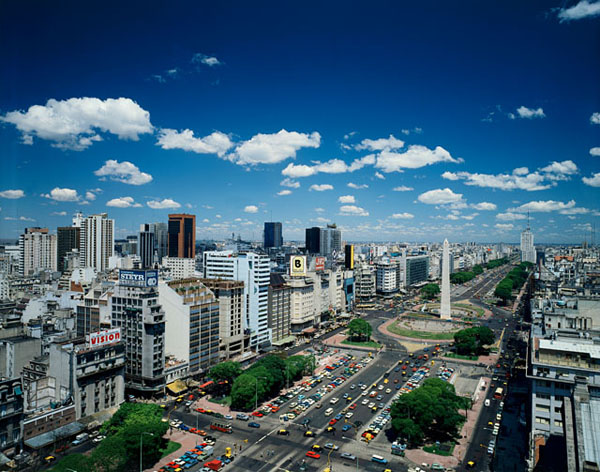
Before arriving to the fishing grounds, every visitor to Argentina first pass through the capitol city of Buenos Aires, a thriving metropolis of over 13 million people. Often described as having more in common with its modern European counterparts than with the rest of Latin America, Buenos Aires is among the safest and most tourist-friendly cities on the continent. Much of this stems from the heavy Spanish and Italian immigration from decades past, which has produced a vibrant and unique urban culture. With its modern amenities, rich nightlife, famously beautiful women, and steaks-the-size-of-your-head, it’s sometimes a wonder that anglers ever get beyond this initial gateway point. A couple of days here is highly recommended, as it provides visitors with the opportunity to indulge in some cosmopolitan culture before heading off to the fishing grounds farther a field.

Once the hangover wears off, you’ll have to make the difficult decision of where to fish. The two most popular regions among fly fishermen are the northern and southern extremes of the country. In the far south lies Patagonia, a captivating expanse of sparsely-populated wilderness reminiscent of the American West, where wild trout, salmon, and steelhead thrive in pristine waterways pouring down from the snow-capped Andes. In the far north lies a subtropical environment drained by the enormous Rio de la Plata basin, which is home to the voracious golden dorado and myriad other exotic species.
Patagonia
Patagonia is the name given to the entire southern peninsula of South America, roughly between 38 and 55 degrees south latitude. Its 380,000+ square miles are shared by the nations of Argentina and Chile, with the Andes mountain chain forming a natural boundary between the two. Patagonia’s mystique and raw beauty have irresistibly drawn explorers, mountaineers, prospectors, and naturalists alike. Today, Patagonia is one of the last fly-fishing frontiers on earth. In its more remote areas is still a sparsely-inhabited and rustic land as trackless and wild as it was a century ago, where many lakes and rivers remain relatively unknown and unexplored by fishermen.
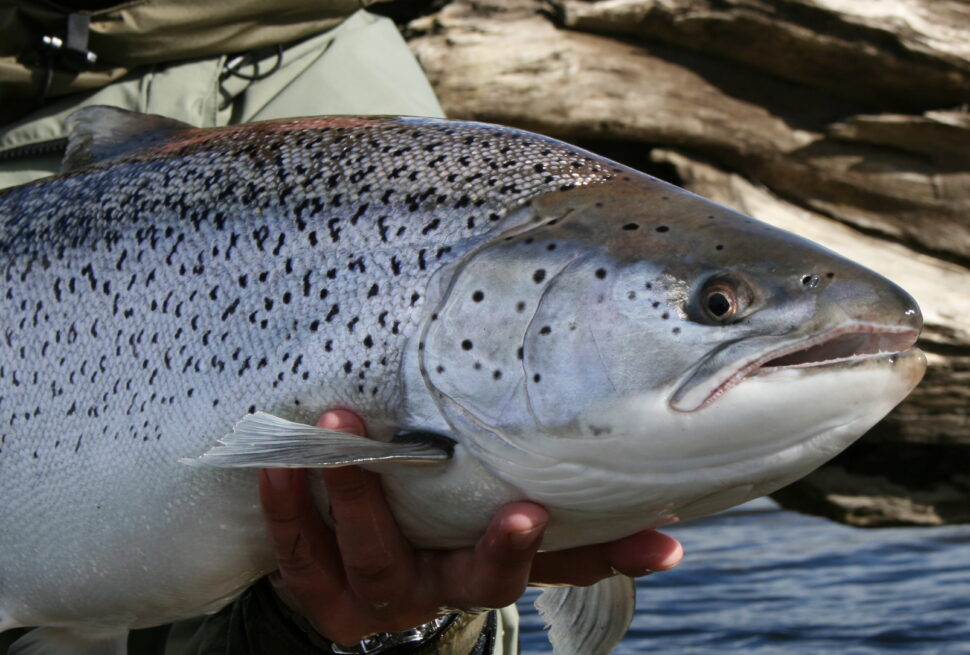
Characterized by dramatic contrasts, Patagonia’s fishing could comprise anything from turquoise rivers cutting through temperate rainforests to tea-stained chalk streams meandering over desolate steppe, or from sight-fishing in a technical spring creek, to spey casting in a massive glacial river. And while the trout may technically be the same species as their Northern Hemispheric cousins, 100 years of uninterrupted adaptation within distinct environments has resulted in some exotic trout fishing unlike anywhere else in the world. Oversized trout chasing down equally oversized dry flies, explosive 20lb sea-run browns, or a unique run of Atlantic steelhead are just a few examples of the unparalleled fishing that Patagonia can offer.

Of Argentina’s roughly 40 million inhabitants, less than 10% live in Patagonia, although its landmass comprises roughly 30% of the country (an area the size of Montana and California combined). Popular conceptions of Patagonia therefore continue to characterize it as one of our last frontiers, often quite accurately. At the same time, parts of Patagonia are bustling with commerce and feature deluxe fishing lodges and other modern amenities to keep any tourist comfortable, if not pampered. Far from being the static “no man’s land” that some may imagine; Patagonia actually exhibits a great diversity of infrastructure & population densities. Generally speaking, both are more concentrated in northern Patagonia, and gradually become fewer and farther between as you head south. At the same time, however, the fish tend to be larger the farther south you go, mostly because of the presence of anadromous species like Steelhead and Sea Trout in the southern reaches. Patagonia is thus logically subdivided into two distinct regions: North and South.
Northern Patagonia:



You must be logged in to post a comment.